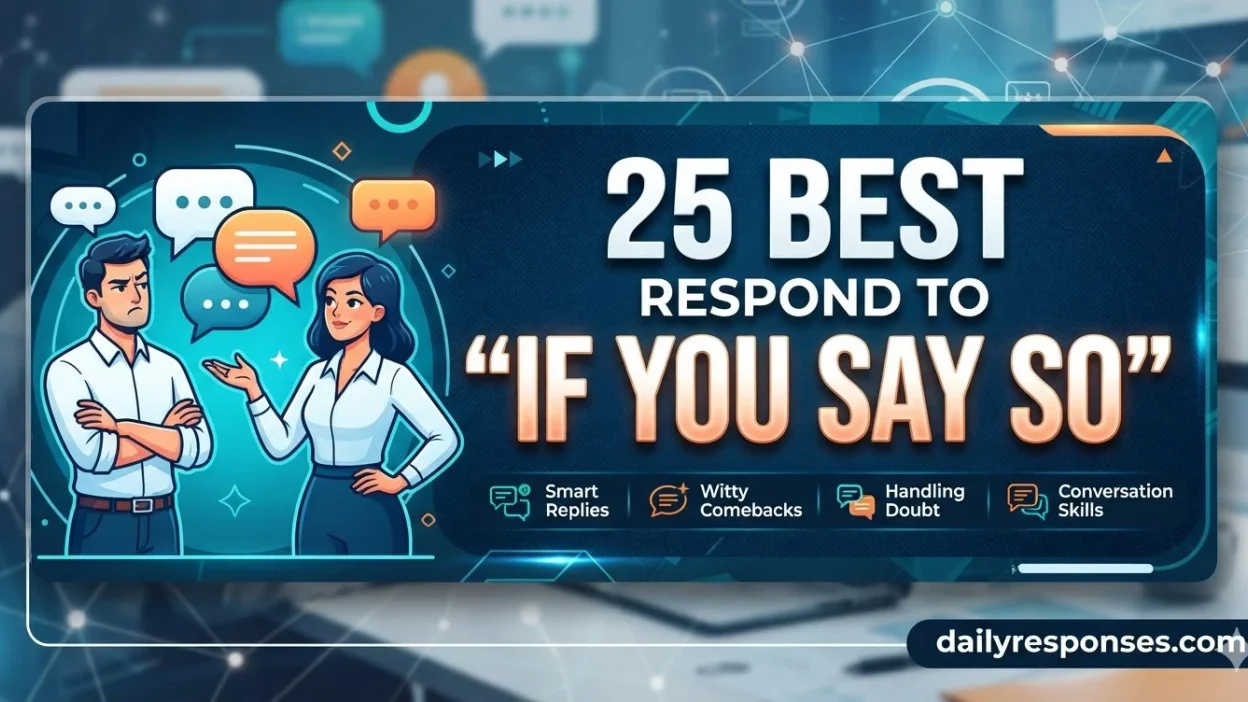
When choosing Best Respond To “If You Say So”, remember that this simple phrase can mean something different depending on the tone and situation. It may sound playful, doubtful, skeptical, sarcastic, or slightly annoyed when someone does not completely believe your words. From experience, choosing your words carefully can help you give the best response without making a small disagreement into a bigger problem. Whether you’re talking with a friend, partner, coworker, or someone you’re getting to know, a thoughtful reply can keep the conversation friendly and natural.
The right comeback should fit the relationship and what you want to communicate. A polite answer can show confidence, while a funny comeback, witty line, or clever response can bring humor and wit into a lighthearted conversation. A confident reply is useful when you want to stand by your point, while subtle sarcasm can work when the mood allows it. These practical responses are useful in texts, casual conversations, friendships, dating, and other everyday situations. Responding well can open the door to a plethora of amusing replies, from outright agreement to a playful dash of sarcasm.
In this article, we explore 25 clever comebacks and responses for both a serious exchange and casual moments. You might need a serious answer, something funny, or just a little humor and warmth to make the conversation easier. There is enough flexibility to prevent a small misunderstanding and keep things moving. The person who says “If you say so” may simply be responding to your point, so a confident and friendly reply can help you handle the moment naturally.
Quick Answer:
The best response to “If you say so” depends on the mood. You can respond confidently with “I do say so,” playfully with “You know I’m usually right,” or calmly with “I’m just telling you how I see it.” Choose a reply that matches the relationship and tone.
Synonyms for : Best Respond To “If You Say So”
- I’m Glad You Trust Me
- You Know I’m Usually Right
- That’s All I’m Saying
- Fair Enough
- You’ll See
- I’m Just Being Honest
- Believe Me or Don’t
- That’s Your Call
- I’ll Take That as a Yes
- Don’t Sound So Convinced
- I Know What I Mean
- You Don’t Have to Agree
- Maybe I’m Wrong
- Let’s See What Happens
- I’m Not Arguing With You
- You’re Free to Think That
- Okay, We’ll Leave It There
- You’re Not Buying It, Are You?
- I’ll Prove It
- That’s Fine With Me
- I’ll Stick With My Story
- What Would Convince You?
- I’ll Let You Decide
- You’ll Thank Me Later
- And I Stand By It
1. “I’m Glad You Trust Me”
Scenario: Use this when “If you say so” sounds doubtful, but you want to respond warmly instead of arguing.
Examples:
“I’m glad you trust me, even if you’re still a little skeptical.”
“Give me a chance, and you’ll see that I’m actually right.”
“I promise I’m not trying to steer you in the wrong direction.”
Explanation: This response keeps things positive and avoids turning doubt into an argument. It gently reminds the other person that your intentions are honest.
2. “You Know I’m Usually Right”
Scenario: This works well when you’re joking with someone who knows your personality and enjoys playful confidence.
Examples:
“You know I’m usually right, so maybe just trust me this time.”
“Come on, you know my track record isn’t exactly terrible.”
“You’ll probably admit I was right once everything becomes clear.”
Explanation: A confident response can make the conversation playful without becoming aggressive. Use it with people who understand your humor and won’t take your confidence personally.
3. “That’s All I’m Saying”
Scenario: Use this when you’ve made your point and don’t want to continue debating it.
Examples:
“That’s all I’m saying, and you can decide what you think.”
“I’ve shared my opinion, so I’ll let you make your choice.”
“I’m not trying to convince you, just giving you my honest thoughts.”
Explanation: This answer creates space for both people to have different opinions. It keeps the discussion calm while showing that you’re comfortable standing behind your words.
4. “Fair Enough”
Scenario: Choose this when you want to acknowledge their response without creating unnecessary tension.
Examples:
“Fair enough, you don’t have to agree with me right now.”
“Fair enough, I understand why you might see things differently.”
“Fair enough, we can agree to disagree about this one.”
Explanation: “Fair enough” is simple, mature, and flexible. It acknowledges the other person’s perspective without requiring either person to change their mind.
5. “You’ll See”
Scenario: This playful response works when you feel confident that time will eventually prove your point.
Examples:
“You’ll see what I mean once everything starts making sense.”
“Just wait a little, and you’ll understand why I said that.”
“You’ll see, I have a feeling this will work out.”
Explanation: This response adds confidence without demanding immediate agreement. It works especially well when the situation will naturally provide an answer later.
6. “I’m Just Being Honest”
Scenario: Use this when the other person seems doubtful about something you’ve said sincerely.
Examples:
“I’m just being honest with you, even if it sounds unexpected.”
“I’m telling you exactly what I think, nothing more than that.”
“I’m just being honest because I care about being straightforward.”
Explanation: This response emphasizes honesty rather than winning an argument. It can reassure someone that your words come from sincerity rather than an intention to criticize.
7. “Believe Me or Don’t”
Scenario: Choose this when you want to stay confident and stop trying to convince someone.
Examples:
“Believe me or don’t, but I know what I experienced.”
“You don’t have to believe me, but I’m telling the truth.”
“Believe me or don’t, I’m comfortable with what I said.”
Explanation: This reply shows confidence and independence. It makes clear that you won’t pressure someone into agreeing, while still standing firmly behind your own experience.
8. “That’s Your Call”
Scenario: Use this when you’ve offered advice and want the other person to make their own decision.
Examples:
“That’s your call, but I’d definitely think about it first.”
“It’s completely your decision, and I’ll respect whatever you choose.”
“That’s your call, I’ve simply shared what I would do.”
Explanation: This response respects personal choice and keeps pressure out of the conversation. It works especially well when someone asks for advice but remains uncertain.
9. “I’ll Take That as a Yes”
Scenario: Try this playful reply when someone says “If you say so” in a teasing or reluctant way.
Examples:
“I’ll take that as a yes and happily move forward.”
“Sounds like agreement to me, even if you won’t admit it.”
“I’m choosing to interpret that as your official approval.”
Explanation: This humorous response can lighten the mood and turn mild skepticism into friendly teasing. It works best when both people are comfortable joking around.
10. “Don’t Sound So Convinced”
Scenario: Use this playfully when someone responds with obvious doubt and you want to tease them.
Examples:
“Wow, you sound incredibly convinced by everything I just said.”
“Your confidence in my answer is truly inspiring right now.”
“Try sounding a little more convinced next time, please.”
Explanation: This response points out their skepticism without directly attacking them. A playful tone helps make the exchange funny rather than defensive or confrontational.
11. “I Know What I Mean”
Scenario: Choose this when someone misunderstands your point and you want to calmly clarify yourself.
Examples:
“I know what I mean, even if I explained it badly.”
“Maybe I didn’t explain it clearly, but my point still stands.”
“I understand how it sounded, but that wasn’t what I meant.”
Explanation: This response gives you room to clarify without becoming defensive. It can help prevent misunderstandings while keeping the conversation respectful and productive.
12. “You Don’t Have to Agree”
Scenario: Use this when someone seems resistant and you want to remove pressure from the discussion.
Examples:
“You don’t have to agree with me for us to get along.”
“You can see it differently, and that’s completely okay with me.”
“You don’t have to agree; I respect your perspective too.”
Explanation: This response recognizes that disagreement is normal. It protects the relationship by showing that different opinions don’t automatically have to become personal conflicts.
13. “Maybe I’m Wrong”
Scenario: Choose this when you’re open to another perspective and don’t want to sound overly certain.
Examples:
“Maybe I’m wrong, but that’s honestly how it looks to me.”
“I could be mistaken, so I’m definitely open to hearing your side.”
“Maybe I’m missing something, so tell me what you think.”
Explanation: Admitting uncertainty can make conversations more comfortable. It shows confidence without pretending to know everything and invites the other person to explain their perspective.
14. “Let’s See What Happens”
Scenario: This works when neither person can know the outcome yet and arguing won’t change anything.
Examples:
“Let’s see what happens before we decide who was right.”
“We don’t know yet, so let’s just wait and see.”
“Let’s give it some time and see how everything unfolds.”
Explanation: This response shifts attention away from disagreement and toward future results. It encourages patience when there isn’t enough information to settle the issue immediately.
15. “I’m Not Arguing With You”
Scenario: Use this when you want to make clear that you’re sharing your view, not starting an argument.
Examples:
“I’m not arguing with you; I’m simply explaining how I see things.”
“I’m not trying to debate you, just sharing my honest opinion.”
“There’s no argument here, I’m just telling you what happened.”
Explanation: This response lowers tension by separating an opinion from an argument. It can help both people communicate without feeling pressured to defend themselves.
Read More : 25 Best Responses To Someone Saying They Appreciate You
16. “You’re Free to Think That”
Scenario: Choose this when you want to acknowledge their disagreement without continuing the conversation.
Examples:
“You’re free to think that, and I’m comfortable with my opinion.”
“You can absolutely think that; we don’t have to agree.”
“You’re free to see it that way, and I respect that.”
Explanation: This response establishes respectful boundaries without insulting the other person. It communicates that different viewpoints can exist without requiring further debate.
17. “Okay, We’ll Leave It There”
Scenario: Use this when the conversation is becoming repetitive and you’d rather move on.
Examples:
“Okay, we’ll leave it there and talk about something else.”
“Fair enough, let’s leave this one alone for now.”
“Alright, we’ve both said enough, so let’s move forward.”
Explanation: Sometimes the best response is ending a circular discussion. This keeps the interaction peaceful and prevents a minor disagreement from becoming unnecessarily stressful.
18. “You’re Not Buying It, Are You?”
Scenario: Try this when you want to directly but playfully acknowledge their obvious skepticism.
Examples:
“You’re not buying what I’m saying, are you?”
“Be honest, you’re still not convinced by my explanation.”
“I can tell you’re skeptical, so what are you thinking?”
Explanation: This response invites honesty and gives the other person an opportunity to explain their doubts. It can turn awkward tension into a more open conversation.
19. “I’ll Prove It”
Scenario: Use this when you can demonstrate your point through actions rather than continuing a verbal debate.
Examples:
“I’ll prove it to you instead of wasting time arguing about it.”
“Give me a chance, and I’ll show you exactly what I mean.”
“I don’t need to argue; I can simply show you.”
Explanation: Actions can sometimes communicate more clearly than explanations. This response focuses on demonstrating your point instead of demanding immediate trust or agreement.
20. “That’s Fine With Me”
Scenario: Choose this calm response when the other person remains unconvinced and you’re comfortable leaving things there.
Examples:
“That’s fine with me; we can simply see things differently.”
“That’s completely fine, I’m not bothered if you disagree.”
“That’s fine with me, and I appreciate you being honest.”
Explanation: This answer shows emotional calm and acceptance. It tells the other person that disagreement doesn’t threaten the relationship or your confidence in your own perspective.
21. “I’ll Stick With My Story”
Scenario: Use this playfully when someone doubts what you’ve told them but you’re standing by your version.
Examples:
“I’ll stick with my story because that’s exactly what happened.”
“I’m sticking with my answer, even if you remain suspicious.”
“My story isn’t changing just because you look unconvinced.”
Explanation: This response works well in lighthearted conversations where someone is teasing or questioning your story. It communicates confidence while keeping the exchange playful.
22. “What Would Convince You?”
Scenario: Use this when you genuinely want to understand why the other person remains doubtful.
Examples:
“What would convince you that I’m actually telling you the truth?”
“What would help you understand where I’m coming from?”
“What would make you feel more comfortable believing what I said?”
Explanation: This response moves the conversation toward understanding instead of conflict. It encourages the other person to explain their concerns and gives you useful information.
23. “I’ll Let You Decide”
Scenario: Choose this when you’ve shared your thoughts and want to give the other person complete freedom.
Examples:
“I’ve said what I needed to say, so I’ll let you decide.”
“I trust you to make whatever decision feels right for you.”
“I’ve given you my opinion, and now the choice is yours.”
Explanation: This response balances honesty with respect. It shows that you’re willing to offer guidance while recognizing that the final decision belongs to the other person.
24. “You’ll Thank Me Later”
Scenario: Use this playful line when you’re confident your advice will eventually prove useful.
Examples:
“You’ll thank me later when you realize I was onto something.”
“Just wait, you might actually thank me for this advice.”
“Remember this conversation when everything works out exactly.”
Explanation: This playful response adds confidence and humor to the conversation. It’s best used casually, especially with friends who appreciate teasing and lighthearted confidence.
25. “And I Stand By It”
Scenario: Use this confident response when you want to clearly stand behind your opinion without sounding aggressive.
Examples:
“I said what I meant, and I completely stand by it.”
“That’s my honest opinion, and I’m comfortable standing behind it.”
“I’ve thought about it carefully, and I still stand by what I said.”
Explanation: This response communicates confidence without demanding agreement. It shows that you’ve considered your words and are comfortable expressing your position respectfully.
FAQs:
1. What does “If You Say So” usually mean?
“If you say so” can sound doubtful, skeptical, playful, or sarcastic. The meaning usually depends on the person’s tone, the situation, and your relationship with them.
2. What is a good response to “If You Say So”?
A good response can be confident and friendly, such as “I do say so,” “You’ll see,” or “Trust me on this one.” Choose your reply based on the mood.
3. How can I give a funny response to “If You Say So”?
You can use light humor to avoid making the conversation tense. A playful response like “Well, I’m saying it with confidence!” can keep things relaxed.
4. Is “If You Say So” rude?
Not always. It can be completely harmless in a casual conversation, but it may sound dismissive or annoyed when said with a sarcastic or doubtful tone.
5. Can I use these responses in text messages?
Yes. These responses can work well in texts, dating conversations, friendships, casual chats, and everyday situations. Just make sure your reply matches the other person’s tone.
Conclusion:
Knowing how to respond to “If You Say So” can make everyday conversations easier and more natural. The best reply depends on the tone, relationship, and message behind those words. You can choose a confident response when you want to stand by your point, use humor when the moment feels playful, or stay polite when the conversation is more serious.
The goal isn’t always to prove that you’re right. Sometimes, the right words simply keep the conversation friendly and prevent a small misunderstanding from becoming something bigger. Choose a response that feels natural to you, matches the situation, and helps keep the conversation moving.

Alyan Bhatti is the author of DailyResponses.com, where he shares creative responses, smart conversation tips, and practical communication advice to help readers express themselves with confidence every day.
[…] Read More : 25 Best Respond To “If You Say So” […]