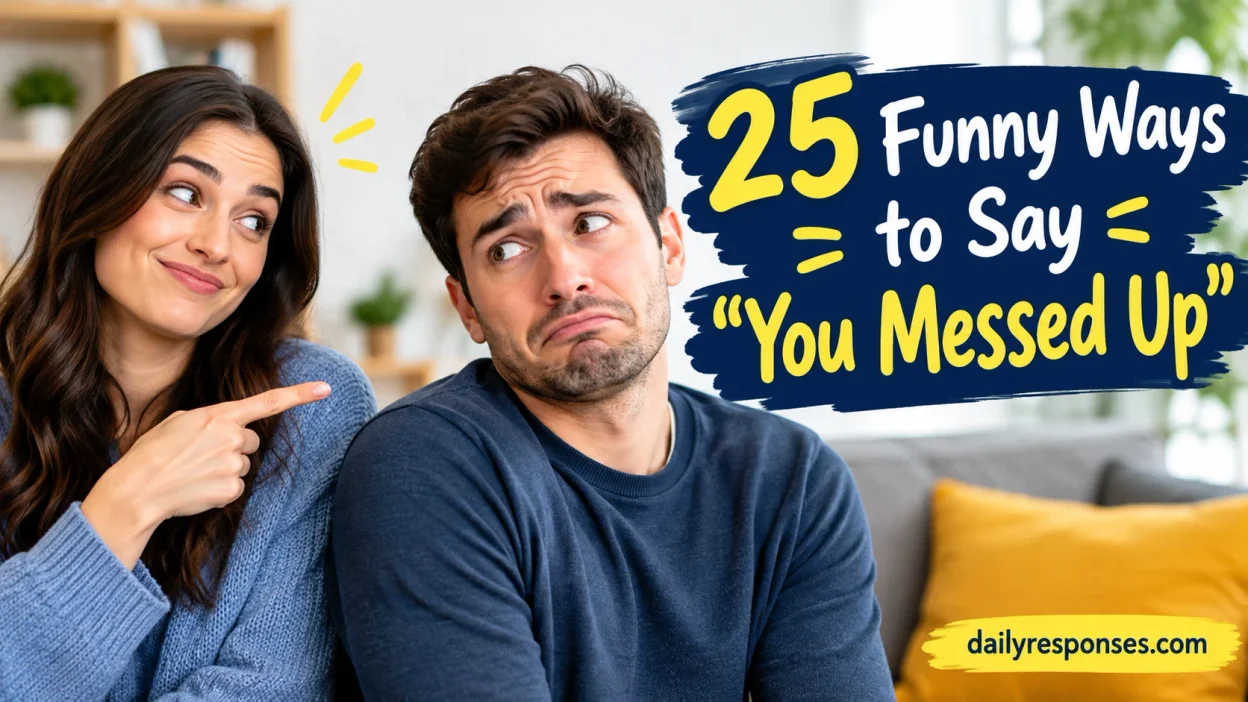
Funny Ways to Say “You Messed Up” can turn an awkward moment into a lighter exchange when someone makes a mistake, because humor often works better than a serious lecture.
Sometimes, a mistake is an inevitable part of the human experience, and everyone will make mistakes at some point. The best response may simply be a little humor, funny words, or amusing expressions that help lighten the mood instead of making an awkward moment worse. Whether you’re with friends, family, or coworkers, the right funny phrase can help you say “you messed up” without leaving the other person feeling embarrassed or attacked. In my experience, these expressions work best when they feel natural and friendly.
Funny ways to point out a mistake are especially useful when someone asks “why did I do that”, has a small oops, or simply messes up after they forgot something, made a silly decision, or completely misunderstood a situation. Instead of saying something boring, choose a playful phrase that suits their judgment, your relationship, and the level of teasing involved. During teasing friends, playful arguments, dramatic storytelling, and casual conversations, everyday English shows how humor can help people cope with embarrassment, reflect on mistakes, and keep an awkward error from becoming uncomfortable or hurtful.
The key is to match the phrase with the situation and deliver it wisely. A lighthearted response can turn an error, blunder, or mishap into a chance for growth opportunities and lessons, while helping you keep things light and summon a chuckle. You can point out the mistake from the sidelines while witnessing someone who slipped up, or dive right in with “Wow, fumbled fabulously!” or “Congrats, hit rock bottom!” These funny phrases and playful expressions can become useful tools in your arsenal. Whether you’re creating an article with 25 practical examples or sending a friendly message, avoid being unnecessarily harsh. Keep the meaning clear, make the humor fit the moment, and choose a response that feels playful rather than like a serious response.
Quick Answer:
If someone clearly made a mistake, you can jokingly say, “Well, that went sideways,” “Oops, somebody pressed the wrong button,” “You took a creative approach,” or “Congratulations, you found a new way to mess that up.” Choose the phrase based on how close you are to the person and how serious the mistake was.
Synonyms for : Funny Ways to Say “You Messed Up”
- Well, That Went Sideways
- Oops, Somebody Pressed the Wrong Button
- You Took the Scenic Route
- That Was a Creative Choice
- Congratulations, You Broke It
- That Could Have Gone Better
- You Had One Job
- Well, That’s One Way to Do It
- You’ve Created a Masterpiece
- Nailed It… Almost
- That’s Going in the Hall of Fame
- You Really Outdid Yourself
- The Plot Thickens
- Mission Accomplished… Sort Of
- That Was Certainly a Decision
- You’ve Entered Chaos Mode
- That’s Not Quite What We Ordered
- You Missed the Assignment
- Well, That Was Ambitious
- We’ll Pretend That Never Happened
- You’ve Made Things Interesting
- That’s a New One
- You’ve Been Promoted to Problem Creator
- Error 404: Good Decision Not Found
- And That’s How We Got Here
1. Well, That Went Sideways
Scenario: Your friend tried to fix something but somehow made the situation even more complicated.
Examples:
- “Well, that went sideways faster than any of us could have possibly expected.”
- “I think your plan just took an unexpected vacation from reality.”
- “That solution definitely created a few more problems than it solved.”
Explanation: This phrase humorously points out that something didn’t go according to plan. It works well for harmless mistakes because it sounds playful rather than harsh, making it easier to tease someone without creating unnecessary tension.
2. Oops, Somebody Pressed the Wrong Button
Scenario: Someone accidentally clicked, changed, deleted, or activated something they weren’t supposed to.
Examples:
- “Oops, somebody definitely pressed the wrong button at the worst possible moment.”
- “That button clearly had plans for your entire afternoon.”
- “Well, congratulations, you officially activated something completely unexpected.”
Explanation: This response is perfect for small accidental mistakes involving technology or decisions. It keeps the situation light while gently suggesting that someone probably made an unfortunate choice.
3. You Took the Scenic Route
Scenario: Your friend completed a simple task in the most complicated way imaginable.
Examples:
- “You certainly took the scenic route to reach that very simple answer.”
- “That was definitely a longer journey than anyone expected today.”
- “I admire your commitment to making simple things wonderfully complicated.”
Explanation: “You took the scenic route” jokingly suggests that someone made a task harder than necessary. It’s a friendly way to highlight an inefficient approach without directly calling someone careless or incompetent.
4. That Was a Creative Choice
Scenario: Someone makes a questionable decision and you want to tease them without sounding too serious.
Examples:
- “That was certainly a creative choice, and nobody saw it coming.”
- “I never would have imagined choosing that particular strategy today.”
- “You definitely brought some unexpected creativity into this situation.”
Explanation: This phrase uses gentle sarcasm to acknowledge a questionable decision. It works especially well among friends because it sounds like praise at first while subtly communicating that the choice probably wasn’t the smartest.
5. Congratulations, You Broke It
Scenario: Someone was supposed to fix or handle something but accidentally caused another problem.
Examples:
- “Congratulations, you somehow managed to break the one thing working perfectly.”
- “Well done, you successfully turned a tiny problem into another problem.”
- “I think the situation was happier before you started helping.”
Explanation: This playful phrase exaggerates the mistake for comedic effect. Use it with people who understand your humor, especially when the problem is minor and there’s no real harm involved.
6. That Could Have Gone Better
Scenario: Someone’s attempt doesn’t work out, and everyone can clearly see the result.
Examples:
- “Well, that could have gone significantly better under different circumstances.”
- “I think we can all agree that plan needed another rehearsal.”
- “That was definitely not the outcome anyone had pictured beforehand.”
Explanation: This is a classic understated way to point out a mistake. Its humor comes from pretending that the situation was only slightly unsuccessful when everyone knows things went considerably wrong.
7. You Had One Job
Scenario: Someone forgets or fails at a very simple responsibility.
Examples:
- “You had one job, and somehow the universe received a completely different assignment.”
- “One tiny responsibility, and you decided to make it memorable.”
- “I trusted you with one simple task, and history was made.”
Explanation: “You had one job” is a familiar humorous expression for simple mistakes. It works best when the person’s responsibility was straightforward and the mistake is harmless enough to laugh about.
8. Well, That’s One Way to Do It
Scenario: Someone approaches a task in a strange or unexpected way.
Examples:
- “Well, that’s certainly one way to solve a problem nobody expected.”
- “I wouldn’t have chosen that method, but here we are.”
- “Your approach was unexpected, unusual, and somehow completely unforgettable.”
Explanation: This phrase politely hides criticism behind humor. It’s useful when someone’s method clearly didn’t work, but you want to avoid directly saying that they made a bad decision.
9. You’ve Created a Masterpiece
Scenario: Someone makes a hilariously obvious mistake that looks almost impressive.
Examples:
- “You’ve created an absolute masterpiece of confusion right here.”
- “Honestly, this mistake deserves its own special exhibition somewhere.”
- “I’ve never seen such impressive chaos produced so quickly.”
Explanation: Calling a mistake a “masterpiece” creates playful sarcasm. The exaggerated compliment makes the phrase funny while clearly communicating that the result is far from perfect.
10. Nailed It… Almost
Scenario: Someone nearly gets something right but makes one noticeable mistake.
Examples:
- “You absolutely nailed it, except for that tiny detail ruining everything.”
- “So close to perfect, yet somehow wonderfully far away.”
- “I’d call that successful if we ignored what happened afterward.”
Explanation: This phrase works when someone comes close to succeeding but misses an important detail. The “almost” adds gentle teasing without making the person feel like their entire effort was useless.
11. That’s Going in the Hall of Fame
Scenario: Someone makes a particularly funny or memorable mistake.
Examples:
- “That mistake is definitely earning a permanent spot in our hall of fame.”
- “Nobody is forgetting that one anytime soon.”
- “Honestly, that deserves recognition for being impressively unexpected.”
Explanation: This response turns an ordinary mistake into something memorable. It’s especially funny among friends because it suggests the mistake was so entertaining that everyone will keep talking about it.
12. You Really Outdid Yourself
Scenario: Someone makes a mistake that is unusually creative, surprising, or ridiculous.
Examples:
- “You really outdid yourself with that spectacularly unexpected decision today.”
- “I didn’t think the situation could get funnier, but you proved me wrong.”
- “That was an impressive level of unexpected creativity right there.”
Explanation: “You really outdid yourself” can sound complimentary while actually teasing someone about their mistake. The meaning depends heavily on tone, making it ideal for playful conversations with people you know well.
13. The Plot Thickens
Scenario: A mistake creates another surprising problem or unexpected twist.
Examples:
- “And just like that, the plot officially became much more complicated.”
- “Well, this mistake just added an interesting new chapter.”
- “I was wondering what would happen next, and apparently this happened.”
Explanation: This phrase makes a mistake sound like part of an entertaining story. It’s useful when something unexpected happens and you want to acknowledge the chaos without placing too much blame.
14. Mission Accomplished… Sort Of
Scenario: Someone completes a task, but the result is clearly not what was intended.
Examples:
- “Mission accomplished, although the mission apparently changed halfway through.”
- “Technically, something happened, so we’ll call that progress.”
- “You completed the task, just not quite the task we discussed.”
Explanation: This phrase uses playful understatement to recognize that someone technically did something while admitting the result missed the original goal. It’s humorous without being unnecessarily harsh.
15. That Was Certainly a Decision
Scenario: Someone makes a strange choice that leaves everyone else confused.
Examples:
- “That was certainly a decision, and I respect your confidence.”
- “I’m impressed by how confidently you chose the unexpected option.”
- “Nobody can accuse you of making a predictable decision today.”
Explanation: “That was certainly a decision” is funny because it avoids directly calling the choice bad. It leaves the listener to understand the sarcasm while keeping the overall tone light and conversational.
Read More : 25 Funny Ways to Say “Go Away”
16. You’ve Entered Chaos Mode
Scenario: Someone’s actions turn a calm situation into complete confusion.
Examples:
- “You’ve officially entered chaos mode, and there’s apparently no turning back.”
- “Everything was peaceful until you decided to get involved.”
- “Congratulations, you just unlocked the chaos setting nobody requested.”
Explanation: This playful phrase compares someone’s mistake to activating a video game mode. It works particularly well with friends who enjoy gaming references or exaggerated descriptions of everyday problems.
17. That’s Not Quite What We Ordered
Scenario: Someone delivers the wrong result after being given a clear task.
Examples:
- “That’s definitely not what we ordered, but it’s certainly something.”
- “I believe our original request got lost somewhere along the way.”
- “Interesting delivery, although it appears slightly different from our expectations.”
Explanation: This phrase treats a mistake like receiving the wrong restaurant order. It’s a humorous way to point out that the final result doesn’t match expectations without sounding overly critical.
18. You Missed the Assignment
Scenario: Someone completely misunderstands what they were supposed to do.
Examples:
- “You definitely missed the assignment, but at least you looked confident.”
- “That answer went in a completely different direction from the question.”
- “I admire the confidence behind an answer that missed everything.”
Explanation: “You missed the assignment” works when someone misunderstands the task or situation. The humor comes from comparing everyday mistakes to completely misunderstanding a school assignment.
19. Well, That Was Ambitious
Scenario: Someone attempts something beyond their preparation or experience and doesn’t quite succeed.
Examples:
- “Well, that was ambitious, and honestly, I respect the confidence.”
- “You aimed extremely high, even if the landing was questionable.”
- “The plan was bold, but reality had other ideas.”
Explanation: This response focuses more on the ambition than the mistake itself. It can soften criticism by recognizing that the person at least tried something challenging.
20. We’ll Pretend That Never Happened
Scenario: Someone makes an embarrassing but harmless mistake that everyone notices.
Examples:
- “We’ll pretend that never happened and continue with our lives.”
- “Nobody saw anything, and absolutely no records exist.”
- “Let’s quietly erase that moment from everyone’s memory.”
Explanation: This phrase is useful when someone feels embarrassed about a harmless mistake. It turns the awkward moment into a shared joke and can help the person feel less uncomfortable.
21. You’ve Made Things Interesting
Scenario: Someone’s mistake changes the situation and creates unexpected complications.
Examples:
- “You’ve definitely made things interesting, although that wasn’t exactly necessary.”
- “Well, nobody can say today was boring after that.”
- “You somehow added excitement to a perfectly ordinary situation.”
Explanation: This phrase turns an unwanted complication into a humorous event. It’s especially effective when the mistake isn’t serious and everyone can laugh about the unexpected change.
22. That’s a New One
Scenario: Someone makes a mistake you’ve never seen them—or anyone else—make before.
Examples:
- “That’s a new one, and honestly, I’m impressed by the originality.”
- “I’ve witnessed plenty of mistakes, but that one is completely fresh.”
- “You managed to surprise me, and that takes some serious creativity.”
Explanation: “That’s a new one” gently highlights an unusual mistake. The phrase avoids harsh criticism and instead focuses on how surprising or original the situation has become.
23. You’ve Been Promoted to Problem Creator
Scenario: Someone accidentally creates more problems while trying to solve one.
Examples:
- “Congratulations, you’ve officially been promoted to problem creator.”
- “You started as the solution and somehow became part of the problem.”
- “Your assistance has created an impressive amount of additional work today.”
Explanation: This humorous response works when someone’s attempt to help accidentally makes things harder. The fake promotion makes the criticism sound playful rather than personal.
24. Error 404: Good Decision Not Found
Scenario: Someone makes a questionable choice, especially while using technology or discussing something online.
Examples:
- “Error 404: Good decision not found anywhere in this situation.”
- “The system searched everywhere and still couldn’t locate your plan.”
- “Apparently, your decision-making software needs another update.”
Explanation: This internet-style joke is ideal for tech-savvy friends. It turns a questionable decision into a fictional computer error, making the criticism feel more playful and less direct.
25. And That’s How We Got Here
Scenario: A series of small choices eventually leads to a funny or obvious mistake.
Examples:
- “And that’s how we somehow ended up in this exact situation.”
- “One tiny decision at a time, and here we are.”
- “Nobody planned this ending, but somehow we successfully arrived here.”
Explanation: This phrase works when a mistake results from several smaller choices. It sounds reflective and humorous, allowing everyone to acknowledge what happened without focusing blame on one person.
FAQs:
1. What are some funny ways to say “You messed up”?
You can say, “Wow, fumbled fabulously!”, “Congrats, hit rock bottom!”, “That didn’t go according to plan,” or “Well, that was an interesting choice!” These phrases keep the mistake playful.
2. When should I use a funny phrase for a mistake?
Use funny phrases when you know the other person will appreciate humor. They work especially well with friends, family, or coworkers who are comfortable with playful teasing.
3. How can I point out someone’s mistake without hurting their feelings?
Keep your tone friendly and choose a phrase that fits the situation. Avoid jokes that attack someone personally, especially when the mistake is sensitive or embarrassing.
4. Can funny ways to say “You messed up” work at work?
Yes, but you should be careful. Light phrases such as “That took an unexpected turn” or “Looks like we found a plot twist” can work with coworkers when the workplace relationship allows casual humor.
5. Why does humor help when someone makes a mistake?
Humor can reduce tension and make an awkward situation feel easier. A playful response can help someone laugh, reflect on what happened, and move forward without feeling unnecessarily embarrassed.
Conclusion:
Knowing funny ways to say “You messed up” can make everyday conversations more enjoyable. A mistake doesn’t always need a serious reaction, especially when a little humor can lighten the mood.
The best phrase depends on the person, situation, and relationship. When you choose your words wisely and keep your teasing friendly, you can point out a mistake without making the other person feel attacked or uncomfortable. Sometimes, a simple playful comment is all it takes to turn an awkward moment into a chuckle.

Muhammad Haroon is the author of DailyResponses.com, where he writes practical guides, clever responses, and communication tips. His mission is to help readers express themselves with confidence through natural, engaging, and easy-to-understand content.