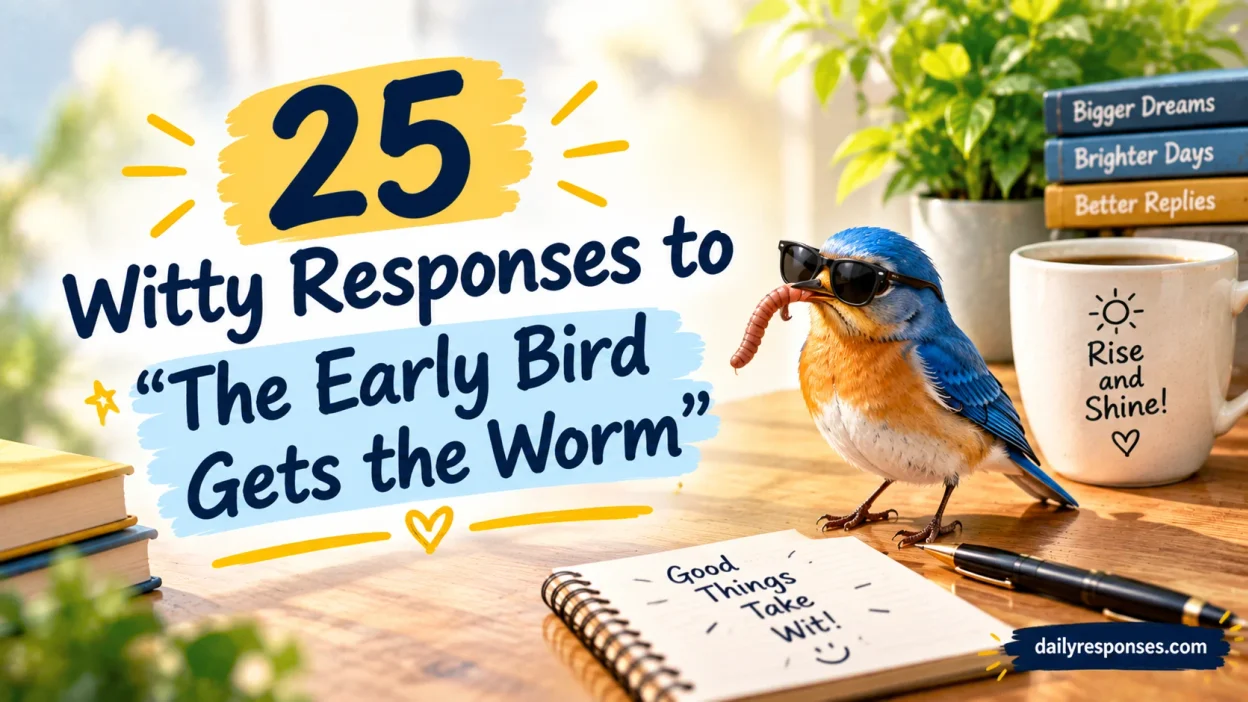
Witty Responses to “The Early Bird Gets the Worm” add humor, confidence, and personality when a familiar saying needs a clever twist in conversation. When someone uses the “early bird gets the worm” as a familiar saying, you don’t always need a simple agreement. You can start early and enjoy the advantage, but the right situation may call for humor, sarcasm, or confidence instead. A clever response with a playful twist can make everyday conversations more enjoyable, while a witty reply lets your personality come through and keeps the conversation light. With friends, coworkers, or family, you can choose the right words to create a memorable moment instead of simply bragging about waking up early or encouraging someone to get moving. These responses help you answer naturally, whether the early, bird, or worm is the real joke.
The phrase “The early bird gets the worm” can sound motivational when a boss, teacher, or energetic friend says it at 6 AM, especially while you’re staring at an alarm clock and negotiating for more sleep. As a phrase, it becomes an easy setup for witty comebacks, dreadful replies, and hilarious one-liners. Since 2025 and beyond, people have become less interested in nodding politely at old sayings and more willing to add humor, sarcasm, and personality. That makes funny responses feel natural and keeps this style of comeback trending among the night owl, professional procrastinator, and anyone who treats sleep like a luxury brand.
If you’re building an ultimate arsenal of clever replies, you can keep them funny, flirty, untamed, or creative, depending on your mood and the person speaking. You might shut down the classic line, playfully roast a friend, or turn a slept in moment into an eye roll when someone looks smugly at you. Parents, a gym buddy, or a cheerful morning person with endless energy before sunrise can all inspire different replies. In my experience writing social content, the best comeback isn’t always the meanest; it’s the one that earns a laugh without becoming a lecture. Good conversational humor, funny responses, playful replies, clever observations, and personality-filled responses work well in texting, chatting, joking around, or work, especially when your smile and tone make the guide feel natural.
Quick Answer:
If someone says “The early bird gets the worm,” you can reply with something like, “Sure, but the second mouse gets the cheese!” Other witty options include “I prefer pancakes over worms,” “The early bird also misses happy hour,” or “Some of us are night owls with better plans.”
Synonyms for : Witty Responses to “The Early Bird Gets the Worm”
- The Early Worm Gets Eaten
- I Prefer Sleeping In
- The Second Mouse Gets the Cheese
- I’m More of a Night Owl
- The Worm Never Asked for This
- Early Birds Need Coffee Too
- I’ll Take the Leftovers
- Some Birds Like Sleeping Late
- The Worm Might Escape
- I’m Waiting for Breakfast
- Early Doesn’t Always Mean Better
- The Smart Bird Sleeps In
- I’ll Catch Up Eventually
- The Worm Has Other Plans
- Let the Bird Work Harder
- I’m Saving My Energy
- Who Says I Want the Worm?
- The Early Bird Can Have It
- I Choose Peace Over Worms
- My Alarm and I Disagree
- I’m Operating on Bird Time
- The Late Bird Gets Better Dreams
- I’ll Arrive When It Matters
- Maybe the Worm Likes Sleeping In
- I’ll Take Coffee Instead
1. The Early Worm Gets Eaten
Scenario: Someone uses the saying to convince you that waking up early is always the smartest choice.
Examples:
- “Maybe sleeping late is actually the worm’s best survival strategy.”
- “I’m not chasing worms before sunrise; they deserve some peace too.”
- “Being first sounds great until you realize something might be waiting.”
Explanation: This playful comeback flips the original saying completely. Instead of praising the early bird, you humorously suggest that arriving first could have unexpected consequences, making the response clever and memorable.
2. I Prefer Sleeping In
Scenario: Your friend proudly tells you that successful people wake up early every morning.
Examples:
- “I respect your morning routine, but my pillow and I have plans.”
- “Some people chase worms; I chase extra hours of sleep.”
- “My productivity starts after breakfast, not before the sun rises.”
Explanation: This response works well when you want to defend your sleep schedule without sounding argumentative. It clearly shows that you value rest while keeping the conversation relaxed, friendly, and humorous.
3. The Second Mouse Gets the Cheese
Scenario: Someone says being early guarantees success, and you want to challenge that idea playfully.
Examples:
- “The second mouse gets the cheese, so timing clearly matters.”
- “I’ll let the first mouse handle the dangerous part for me.”
- “Sometimes waiting gives you information the early bird never gets.”
Explanation: This witty twist uses another familiar saying to challenge the original message. It suggests that being first isn’t always necessary and that patience can sometimes create its own advantages.
4. I’m More of a Night Owl
Scenario: A friend teases you because you prefer staying awake late instead of waking up early.
Examples:
- “I’m not an early bird; I’m professionally committed to being a night owl.”
- “My best ideas usually arrive when your early bird is sleeping.”
- “Different birds have different schedules, and mine prefers moonlight.”
Explanation: This answer confidently embraces a different lifestyle instead of arguing about which schedule is better. It adds personality while reminding the other person that productivity doesn’t look identical for everyone.
5. The Worm Never Asked for This
Scenario: Someone dramatically repeats the proverb while discussing their early morning routine.
Examples:
- “Has anyone actually asked the worm whether it enjoys being caught?”
- “We keep discussing the bird, but nobody considers the worm.”
- “Maybe the worm is tired of becoming everyone’s morning motivation.”
Explanation: This response creates humor by focusing on the forgotten character in the saying. It turns an ordinary proverb into a funny conversation about perspective, making your answer playful without being rude.
6. Early Birds Need Coffee Too
Scenario: Someone brags about waking up early and expects you to admire their discipline.
Examples:
- “Waking up early sounds impressive until caffeine becomes mandatory.”
- “Congratulations on beating sunrise; now go find some coffee.”
- “The early bird gets the worm, but coffee gets everyone functioning.”
Explanation: This comeback acknowledges the value of waking early while adding a relatable coffee joke. It works especially well with coworkers, friends, or anyone who understands that mornings require serious caffeine.
7. I’ll Take the Leftovers
Scenario: Someone insists that early people always get the best opportunities.
Examples:
- “You can have first place; I’m perfectly happy with something good later.”
- “Go ahead and take the worm; I’ll enjoy what remains.”
- “Sometimes the leftovers are better than whatever everyone rushed toward.”
Explanation: This response shows that you aren’t worried about competing for the first opportunity. Its relaxed attitude makes it useful when you want to sound confident, humorous, and comfortable with your own timing.
8. Some Birds Like Sleeping Late
Scenario: Someone jokingly criticizes you for not following a traditional early-morning routine.
Examples:
- “Not every bird needs to wake up before breakfast.”
- “My feathers work perfectly well after a few extra hours.”
- “I’m proof that birds can have completely different schedules.”
Explanation: This comeback turns the bird metaphor into a lighthearted defense of your routine. It communicates that different people have different rhythms while keeping the discussion humorous rather than defensive.
9. The Worm Might Escape
Scenario: Someone proudly explains that waking early gives them an advantage over everyone else.
Examples:
- “What if the worm gets smarter and starts hiding before sunrise?”
- “You’re assuming the worm plans to cooperate with your schedule.”
- “Maybe the worm already knows exactly when you’re coming.”
Explanation: This playful answer imagines the worm fighting back against the proverb. It creates an unexpected twist and gently pokes fun at people who treat familiar sayings as absolute rules.
10. I’m Waiting for Breakfast
Scenario: Someone uses the proverb while encouraging you to get out of bed earlier.
Examples:
- “Forget catching worms; I’m much more interested in catching breakfast.”
- “Wake me when there’s something delicious waiting downstairs.”
- “My morning motivation starts when pancakes become involved.”
Explanation: This response replaces the traditional worm with something more appealing. It is especially effective with friends or family because the humor stays harmless, relatable, and focused on enjoying the morning.
11. Early Doesn’t Always Mean Better
Scenario: Someone suggests that arriving first automatically means you’re making the better choice.
Examples:
- “Being early helps sometimes, but smart timing matters even more.”
- “First isn’t always best when preparation actually matters.”
- “I’d rather arrive ready than simply arrive before everyone.”
Explanation: This response adds a thoughtful perspective while remaining conversational. It doesn’t reject the proverb completely; instead, it points out that preparation, timing, and quality can matter more than simply being early.
12. The Smart Bird Sleeps In
Scenario: Your friend jokes that you are missing opportunities because you don’t wake up early.
Examples:
- “Maybe the smart bird knows when extra sleep is necessary.”
- “Strategic sleeping could be the secret nobody talks about.”
- “I’m not late; I’m carefully managing my energy.”
Explanation: This witty reply reframes sleeping late as intentional rather than lazy. It gives you a confident way to defend your schedule while adding enough humor to prevent the conversation from becoming serious.
13. I’ll Catch Up Eventually
Scenario: Someone reminds you that early starters have already finished while you’re just getting started.
Examples:
- “You can start early; I’ll still get where I need to go.”
- “Different schedules, same destination, so nobody needs to panic.”
- “I might start later, but I’m not planning to stay behind.”
Explanation: This response communicates confidence without competing directly with the other person. It reminds them that people can follow different schedules and still accomplish their goals at their own pace.
14. The Worm Has Other Plans
Scenario: Someone quotes the proverb during a playful discussion about waking up early.
Examples:
- “Maybe the worm booked a vacation and forgot to tell everyone.”
- “What if the worm decided today wasn’t a working day?”
- “You’re assuming that worm is even available this morning.”
Explanation: Imagining the worm as an independent character creates an unexpected punchline. This response works because it takes the familiar proverb literally and introduces a silly situation that keeps everyone entertained.
15. Let the Bird Work Harder
Scenario: Someone tells you that you should wake up early because hardworking people always get ahead.
Examples:
- “I’ll let the early bird handle the morning shift for now.”
- “Somebody has to supervise while that bird does all the work.”
- “I’m happy to let the bird earn its breakfast today.”
Explanation: This comeback humorously refuses the pressure to compete. It suggests that you are comfortable letting someone else rush ahead while you take a more relaxed approach.
Read More : 25 Best Responses to “You’re A Rockstar”
16. I’m Saving My Energy
Scenario: Someone questions why you aren’t rushing into the day as early as they are.
Examples:
- “I’m saving my energy for something more important than worms.”
- “Why spend all my energy before the interesting part begins?”
- “My strategy involves fewer mornings and more efficient afternoons.”
Explanation: This response presents your slower start as a deliberate choice. It works particularly well when someone assumes that an early start automatically means greater productivity throughout the entire day.
17. Who Says I Want the Worm?
Scenario: Someone assumes you’re interested in whatever advantage the early bird supposedly receives.
Examples:
- “Everyone keeps mentioning the worm, but nobody asked whether I wanted it.”
- “Maybe worms simply aren’t on my list of priorities.”
- “I’m pursuing different goals, preferably ones involving breakfast.”
Explanation: This answer challenges the assumption behind the proverb. It is funny because it points out that getting an opportunity isn’t useful if you never wanted that particular opportunity in the first place.
18. The Early Bird Can Have It
Scenario: Someone proudly announces that they are getting started before everyone else.
Examples:
- “Go ahead, take the worm; I’m perfectly comfortable waiting.”
- “Enjoy your early advantage while I enjoy my peaceful morning.”
- “You can have first pick; I’m not competing today.”
Explanation: This response sounds confident because you aren’t bothered by someone else’s early start. It communicates independence while keeping the exchange friendly, especially when someone is teasing you about your schedule.
19. I Choose Peace Over Worms
Scenario: A friend encourages you to wake up early because opportunities supposedly disappear quickly.
Examples:
- “If catching worms requires losing sleep, I’ll choose peace.”
- “Some opportunities can wait until after I’ve had breakfast.”
- “I value peaceful mornings more than imaginary worm competitions.”
Explanation: This comeback gives the proverb a humorous modern twist. Instead of chasing every possible advantage, you emphasize calmness and personal priorities, making the response relatable for anyone who values peaceful mornings.
20. My Alarm and I Disagree
Scenario: Someone asks why you didn’t wake up early despite setting multiple alarms.
Examples:
- “My alarm had one opinion, but my sleepy brain had another.”
- “We discussed waking early, and unfortunately my alarm lost.”
- “The alarm tried its best, but I had stronger arguments.”
Explanation: This response works because it personifies the alarm and turns a common morning struggle into a joke. It is casual, relatable, and easy to use when friends tease you about sleeping late.
21. I’m Operating on Bird Time
Scenario: Someone comments on your unusual schedule and compares it with the traditional early bird.
Examples:
- “I’m operating on a completely different bird time zone.”
- “My internal clock clearly belongs to another species.”
- “I follow bird time, just not the early-bird edition.”
Explanation: This witty phrase keeps the bird theme going while giving your schedule a humorous identity. It works especially well when you want a short, clever answer that doesn’t require much explanation.
22. The Late Bird Gets Better Dreams
Scenario: Someone says early birds get everything while you are still enjoying your sleep.
Examples:
- “Maybe the late bird gets better dreams while everyone else works.”
- “I’m collecting dreams instead of worms, and honestly, it’s working.”
- “Sleep might not catch worms, but it catches much-needed rest.”
Explanation: This response creates a positive alternative to the original proverb. Rather than criticizing early risers, it highlights the enjoyable side of sleeping longer and gives the conversation a playful tone.
23. I’ll Arrive When It Matters
Scenario: Someone tells you that arriving early is always necessary for success.
Examples:
- “I don’t need to arrive first; I just need to arrive prepared.”
- “Timing matters more to me than winning the morning.”
- “I’ll show up when my presence actually makes a difference.”
Explanation: This answer sounds witty but also mature. It shifts attention from simply being early toward being useful, prepared, and intentional, which can make the response suitable for both casual and professional conversations.
24. Maybe the Worm Likes Sleeping In
Scenario: Someone quotes the proverb and you want to respond with absurd, playful logic.
Examples:
- “Nobody asked the worm whether it enjoys being awake early.”
- “Maybe the worm is sleeping while everyone else is hunting.”
- “Perhaps the worm has its own perfect schedule too.”
Explanation: This response creates humor by giving the worm a personal preference. It turns a predictable saying into an imaginative conversation, making it especially fun when chatting with friends who enjoy silly wordplay.
25. I’ll Take Coffee Instead
Scenario: Someone tells you that getting up early is the best way to start your day.
Examples:
- “You can keep the worm; I’ll happily take a fresh cup of coffee.”
- “Early birds get worms, but I’m aiming for caffeine.”
- “My morning reward is coffee, not whatever that bird caught.”
Explanation: This is an easy, relatable response for everyday conversations. It replaces the traditional reward with something many people genuinely enjoy, creating a light joke without making fun of the person who quoted it.
FAQs:
1. What does “The early bird gets the worm” mean?
“The early bird gets the worm” means that people who act early may have better opportunities or advantages. It’s often used to encourage someone to wake up, start working, or take action sooner.
2. What is a witty response to “The early bird gets the worm”?
A witty response can turn the saying into a joke. For example, you could say, “Sure, but the second mouse gets the cheese.” This keeps the conversation playful without sounding unnecessarily rude.
3. How can I reply to the saying if I’m a night owl?
If you prefer sleeping late, try a humorous reply such as, “The night owl gets the best dreams.” You can also make a playful joke about choosing extra sleep over catching an imaginary worm.
4. Can I use witty responses at work?
Yes, but choose your words carefully. With coworkers or a boss, keep the humor friendly and respectful. A light response can make the conversation enjoyable without making it seem like you’re ignoring the value of being punctual.
5. Are sarcastic replies appropriate for friends?
Sarcastic replies can work well with friends who understand your sense of humor. A playful roast or clever comeback can make the saying funnier, especially when the other person is teasing you about waking up early.
Conclusion:
“The early bird gets the worm” may be a classic saying, but your response doesn’t have to sound predictable. A clever comeback can add humor, personality, and energy to an ordinary conversation. Whether you’re replying to a boss, friend, parent, teacher, or morning person, the best response depends on the mood and relationship.
You can choose something funny, flirty, sarcastic, or simply playful. The goal isn’t always to prove the saying wrong; sometimes, it’s just about making people laugh and keeping the conversation enjoyable. With the right words, even an old phrase can become the beginning of a memorable exchange.

Muhammad Haroon is the author of DailyResponses.com, where he writes practical guides, clever responses, and communication tips. His mission is to help readers express themselves with confidence through natural, engaging, and easy-to-understand content.

[…] Read More : 25 Witty Responses to “The Early Bird Gets the Worm” […]