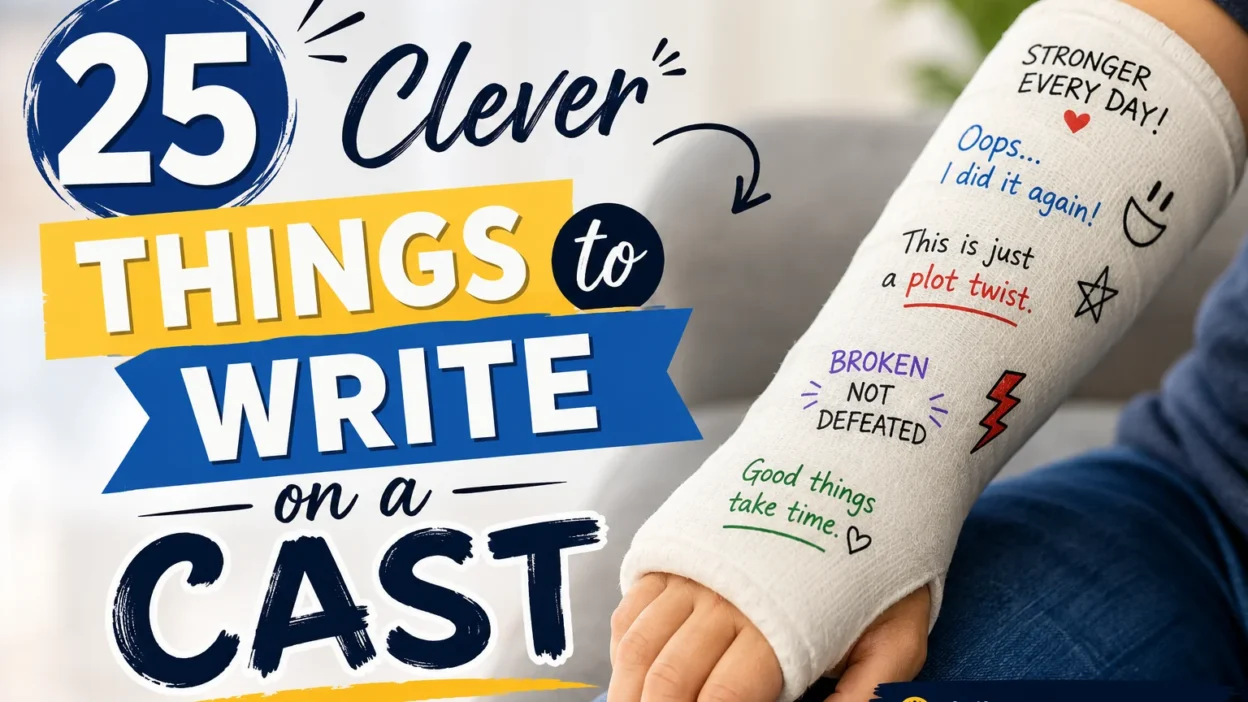
Clever Things to Write on a Cast can brighten recovery, inspire smiles, share hope, and make every healing day feel lighter and more personal.
After getting a cast from breaking a bone, arm, or leg, life can feel slower, limited, physically tiring, and emotionally challenging. An injury, fracture, or other damage often changes your everyday routine, but a few written words can make a real difference. I have watched a plain medical accessory go from looking clinical, boring, or even like a putrid appendage to becoming a creative canvas filled with creativity, creative expression, and personality. Whether you write a cast message, a thoughtful message, or several messages, each one can express care, kindness, comfort, encouragement, support, emotional support, emotional warmth, warmth, hope, motivation, and a positive, uplifting spirit throughout the healing process, recovery, heal, and the full recovery journey. Every reminder keeps reminding the person they are never alone because friends, family, classmates, and every friend offer supportive words.
A cast also becomes a place to enjoy funny messages, humor, humorous jokes, witty one-liners, plays on words, wordplay, playful puns, inspiring quotes, heartwarming notes, clever doodles, and composing ideas that match someone’s identity. A guide or compiled post with 30 or even 748 ideas helps you find the ideal message. These ideas lift your spirits, lift spirits, boost spirits, spread joy, encourage smiling, bring a smile or grin, and turn a temporary setback into a lasting source of joy. Even wearing the cast feels more enjoyable, pleasant, and entertaining, while creating a natural discussion starter.
Before marking or cast signing, be prepared and ready to type something meaningful for somebody who is injured. Try amusing, imaginative, or even crazy ideas that help pass the time as time moves toward mending. A little comedy can grow into a comedy masterpiece or a small masterpiece, replacing every gloomy moment with a joyful note. In the end, laughter, connection, and feeling valued remind every broken person that healing is about much more than medicine.
Quick Answer:
Writing on a cast is a fun and meaningful way to show support, encouragement, and humor to someone recovering from an injury. It helps lift their mood, makes the healing process lighter, and creates lasting memories. From funny jokes to motivational quotes, cast messages turn discomfort into connection and positivity.
Synonyms for : Clever Things to Write on a Cast
- Superhero in Recovery Mode
- Out of Service – Please Try Again Later
- Do Not Touch – Highly Sensitive Area
- Under Construction – Back Soon
- Ninja Training in Progress
- Handle With Care – Human Inside
- Healing Like a Boss
- Broken but Still Awesome
- Do Not Feed the Cast
- Still Loading… Please Wait
- Professional Resting Expert
- I Tried My Best… and Lost
- Cast Sponsored by Gravity
- Be Nice, I’m Healing
- Future Olympic Comeback Loading
- Certified Drama Zone
- This Too Shall Heal
- Please Sign My Cast
- One Bone Down, Still Standing
- Caution: Walking Meme
- Rest Mode Activated
- Be Gentle, I’m Delicate
- I Bend, I Don’t Break
- Pain Today, Power Tomorrow
- Back Soon, Better Than Ever
1. “Superhero in Recovery Mode”
Scenario: A friend just broke their arm but still wants to feel strong and powerful.
Examples
- “Even superheroes need time to recharge their powers fully.”
- “Broken bone, unbroken spirit, still saving the world daily.”
- “Resting today, flying again when your powers return stronger.”
Explanation: This message adds humor and empowerment, turning injury into a superhero story. It helps the person feel strong instead of weak, reminding them that healing is part of every hero’s journey and temporary rest leads to greater strength.
2. “Out of Service – Please Try Again Later”
Scenario: Someone is frustrated about not being able to use their arm or leg normally.
Examples
- “This arm is currently offline due to unexpected maintenance.”
- “System update in progress, mobility will return shortly.”
- “Temporary shutdown, please wait for full recovery completion.”
Explanation: This playful tech-style message lightens frustration by comparing the body to a machine. It reduces stress and adds humor, helping the person see recovery as a temporary pause rather than a permanent limitation in daily life.
3. “Do Not Touch – Highly Sensitive Area”
Scenario: Friends keep playfully poking or teasing the injured area.
Examples
- “Warning: touching may result in dramatic screaming reactions.”
- “Sensitive zone under construction, no interference allowed here.”
- “Handle with care, emotional and physical damage possible.”
Explanation: This humorous warning creates boundaries while keeping things light. It gives the injured person a funny way to ask for space, reducing annoyance while making others smile and be more careful around the injury.
4. “Under Construction – Back Soon”
Scenario: A student or worker feels left out during recovery time.
Examples
- “Rebuilding stronger version, please check back in a few weeks.”
- “Construction zone active, progress happening one day at a time.”
- “Upgrading hardware, better version loading soon.”
Explanation: This phrase compares healing to building something new. It creates optimism and patience, helping the person understand that recovery is progress, not delay, and that something stronger and improved is coming soon.
5. “Ninja Training in Progress”
Scenario: Someone who enjoys jokes, anime, or martial arts culture gets injured.
Examples
- “Ninja training phase one: mastering patience and stillness skills.”
- “Silent warrior recovering strength in hidden dojo mode.”
- “Every ninja needs recovery time between missions and battles.”
Explanation: This creative message turns recovery into training. It adds excitement and imagination, making the healing period feel like part of an epic journey rather than a boring or painful waiting phase.
6. “Handle With Care – Human Inside”
Scenario: Friends or classmates keep joking around with the cast.
Examples
- “Fragile human system, please avoid unnecessary pressure or bumps.”
- “Handle gently, emotional and physical repair ongoing.”
- “Warning: contains one slightly damaged but hopeful human.”
Explanation: This message uses humor to remind others to be gentle. It humanizes the injury in a funny way, helping the person feel cared for while ensuring others treat them with more kindness and awareness.
7. “Healing Like a Boss”
Scenario: Someone wants motivation while dealing with a painful recovery.
Examples
- “Healing strong, no complaints, just pure recovery energy.”
- “Boss mode activated, injuries don’t stop progress.”
- “Running recovery operations like a true champion daily.”
Explanation: This phrase boosts confidence and motivation. It reframes recovery as something powerful and controlled, encouraging a positive mindset and helping the person feel proud of their healing journey instead of discouraged.
8. “Broken but Still Awesome”
Scenario: A person feels embarrassed about their cast.
Examples
- “Still awesome even with temporary hardware malfunction.”
- “Broken parts, but personality remains fully intact.”
- “A little damaged, but still absolutely legendary.”
Explanation: This supportive phrase reassures the person that injury doesn’t reduce their value. It strengthens self-esteem and reminds them that their personality, abilities, and worth remain unchanged during the healing process.
9. “Do Not Feed the Cast”
Scenario: Friends are playful and teasing about the cast.
Examples
- “Feeding unnecessary comments may slow healing process.”
- “Cast is full, no additional jokes required today.”
- “Please avoid overfeeding sarcasm near injury zone.”
Explanation: This funny warning adds humor to recovery while setting playful boundaries. It keeps interactions lighthearted and makes the situation more enjoyable for both the injured person and their social circle.
10. “Still Loading… Please Wait”
Scenario: Someone feels impatient about healing time.
Examples
- “Body rebooting slowly, patience is currently required.”
- “Loading recovery files, please stay tuned.”
- “System upgrade in progress, please do not interrupt.”
Explanation: This tech-inspired phrase helps normalize waiting. It reduces frustration by comparing healing to a loading process, making recovery feel structured and temporary rather than endless or discouraging.
11. “Professional Resting Expert”
Scenario: A person is stuck at home and bored.
Examples
- “Certified expert in doing absolutely nothing right now.”
- “Resting professionally since the injury began.”
- “Top-level specialist in recovery and relaxation mode.”
Explanation: This humorous label turns inactivity into a skill. It helps the person feel productive even while resting, reducing boredom and turning recovery time into something funny and lighthearted.
12. “I Tried My Best… and Lost”
Scenario: Someone got injured during sports or activity.
Examples
- “Victory wasn’t mine, but effort was absolutely legendary.”
- “Played hard, gravity played harder this time.”
- “Almost won, but bones disagreed strongly.”
Explanation: This phrase adds humor to a disappointing moment. It helps the person accept the injury with laughter and move past frustration by turning the situation into a relatable and funny story.
13. “Cast Sponsored by Gravity”
Scenario: A playful way to joke about accidental falls.
Examples
- “Gravity won this round, but I’ll return stronger.”
- “Official victim of unexpected ground attraction.”
- “Gravity: 1, me: recovering slowly but surely.”
Explanation: This humorous message removes blame and adds fun. It makes accidents feel less serious and helps the person laugh at the situation, improving emotional recovery alongside physical healing.
14. “Be Nice, I’m Healing”
Scenario: The injured person wants sympathy from others.
Examples
- “Kindness appreciated more than jokes right now.”
- “Healing zone active, positivity only please.”
- “Soft words required, fragile human recovering.”
Explanation: This message gently requests emotional support. It encourages kindness and empathy from others, helping the injured person feel emotionally safe and supported during their physical recovery process.
15. “Future Olympic Comeback Loading”
Scenario: An athlete or sporty person is injured.
Examples
- “Training pause activated, comeback preparation underway.”
- “Olympic dreams still alive, just temporarily delayed.”
- “Championship return scheduled after full recovery.”
Explanation: This motivational message inspires hope and ambition. It reframes injury as a pause in a bigger journey, encouraging determination and confidence in future success after recovery.
Read More : 25 Synonyms for “In Time of Need”
16. “Certified Drama Zone”
Scenario: Someone reacts dramatically to their injury.
Examples
- “Minor injury, major emotional performance ongoing.”
- “Drama level: expert mode activated.”
- “Warning: excessive storytelling may occur.”
Explanation: This playful message adds humor to overreactions. It keeps things light and funny, helping the person and friends laugh at emotional exaggerations while still acknowledging the discomfort.
17. “This Too Shall Heal”
Scenario: Someone needs emotional encouragement.
Examples
- “Pain is temporary, strength is permanent.”
- “Every day brings you closer to recovery.”
- “Healing happens quietly but powerfully over time.”
Explanation: This motivational phrase brings calm and patience. It reassures the person that recovery is natural and inevitable, helping them stay mentally strong during the healing process.
18. “Please Sign My Cast”
Scenario: Friends are gathering around the cast.
Examples
- “Your signature adds healing power and friendship energy.”
- “Make this cast a memory book of support.”
- “Leave your mark, I’ll carry it proudly.”
Explanation: This message turns the cast into a memory space. It encourages social connection and positivity, helping the injured person feel surrounded by care and shared experiences.
19. “One Bone Down, Still Standing”
Scenario: Someone wants motivation after injury.
Examples
- “Stronger spirit than broken bone situation.”
- “Standing tall, even with temporary setback.”
- “Resilience always wins in the end.”
Explanation: This empowering phrase focuses on resilience. It helps the person see themselves as strong and capable, even while physically injured, reinforcing emotional strength during recovery.
20. “Caution: Walking Meme”
Scenario: Someone who enjoys humor and internet culture is injured.
Examples
- “Currently trending: accidental injury edition.”
- “Living proof that memes walk among us.”
- “Warning: may cause laughter and sympathy.”
Explanation: This internet-style humor makes recovery fun. It helps the person embrace their situation with lightheartedness and reduces embarrassment through relatable meme culture.
21. “Rest Mode Activated”
Scenario: Someone is forced to slow down.
Examples
- “Energy saving mode enabled until further notice.”
- “System running on low power recovery mode.”
- “Rest mode active, no heavy tasks allowed.”
Explanation: This message encourages rest without guilt. It frames recovery as a natural pause, helping the person accept slowing down as part of healing instead of frustration.
22. “Be Gentle, I’m Delicate”
Scenario: Friends are playful and sometimes rough.
Examples
- “Handle with kindness, I bruise emotionally too.”
- “Gentle mode required for full recovery success.”
- “Soft interaction only, repair in progress.”
Explanation: This humorous request promotes care and awareness. It makes others more considerate while keeping the mood friendly and light, ensuring emotional comfort during physical recovery.
23. “I Bend, I Don’t Break”
Scenario: Someone wants a strong mindset reminder.
Examples
- “Flexibility in spirit, strength in recovery.”
- “Bending through challenges, not breaking under pressure.”
- “Stronger after every setback faced.”
Explanation: This empowering phrase builds mental resilience. It reminds the person that setbacks are temporary and strength comes from endurance and adaptability during recovery.
24. “Pain Today, Power Tomorrow”
Scenario: Someone needs motivation during tough healing days.
Examples
- “Every ache brings future strength closer.”
- “Temporary pain leads to permanent growth.”
- “Healing through struggle builds lasting resilience.”
Explanation: This motivational message reframes pain as progress. It encourages patience and optimism, helping the person stay focused on long-term recovery rather than short-term discomfort.
25. “Back Soon, Better Than Ever”
Scenario: Someone nearing the end of recovery.
Examples
- “Almost healed, preparing for a stronger comeback.”
- “Returning soon with upgraded strength and energy.”
- “Recovery is nearly complete, watch this space.”
Explanation: This hopeful message signals progress and improvement. It builds excitement for recovery completion and reinforces confidence that the person will return even stronger than before.
FAQs:
What are clever things to write on a cast?
Clever things to write on a cast include funny jokes, short quotes, encouraging words, playful puns, heartfelt messages, and creative doodles. The goal is to make the person smile and brighten their recovery.
Is it okay to write on a medical cast?
Yes, you can usually write on the outside of a cast with a permanent marker. However, avoid damaging the cast or writing anything that could affect medical instructions. If you’re unsure, ask your healthcare provider first.
What should I avoid writing on a cast?
Avoid negative comments, offensive jokes, or anything that could embarrass the person. Keep your message kind, supportive, and appropriate so it becomes a happy memory of their healing journey.
Can I draw pictures instead of writing words?
Absolutely! Small doodles, cartoons, hearts, stars, smiley faces, or other creative sketches are great additions. Combining drawings with a short message often makes the cast even more personal.
Who can sign a cast?
Friends, family members, classmates, coworkers, teammates, and teachers can all sign a cast. Having messages from different people makes the cast a meaningful keepsake after recovery.
Conclusion:
A cast may be temporary, but the words written on it can leave a lasting impression. Whether you choose a funny joke, an inspiring quote, or a heartfelt message, every signature adds encouragement and reminds the wearer they are surrounded by people who care.
With these clever things to write on a cast, you can turn an ordinary medical cast into a symbol of support, laughter, and hope throughout the healing process.

Alyan Bhatti is the author of DailyResponses.com, where he shares creative responses, smart conversation tips, and practical communication advice to help readers express themselves with confidence every day.