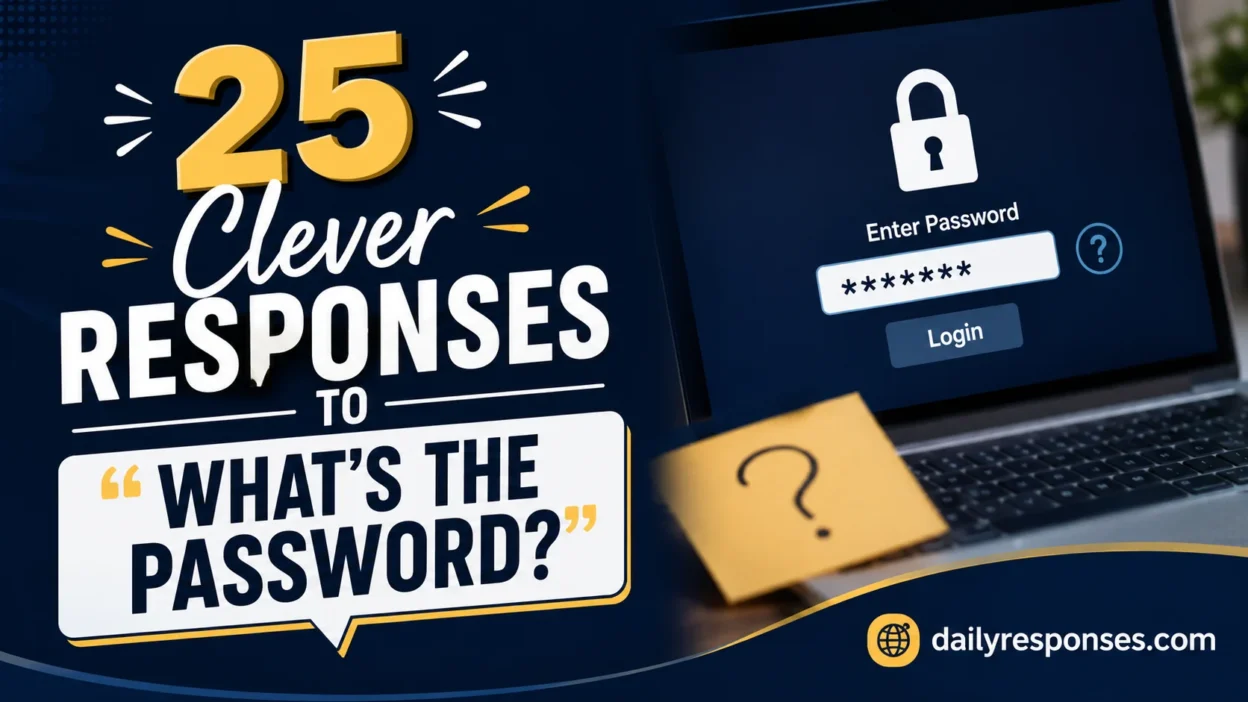
TIClever Responses To “What’s The Password?”TLE helps you choose a smart reply when someone asks for a password in a playful or awkward moment. In everyday conversations, simple phrases can shape how we connect with others. When someone asks for the password, the situation can feel playful, serious, or slightly awkward. I’ve found that knowing how to respond creatively helps you stay confident, build rapport, and keep interactions lighthearted.
The right words, tone, personality, and intention can guide you toward choosing the right response. If you’re caught off guard at a party, in a group chat, or during a funny moment with friends, a witty comeback can turn an awkward pause into pure fun. A ready answer can turn a routine moment into a memorable exchange, especially when clever, hilarious, or smart responses make people laugh, think, or admire your quick wit.
This guide gives you 25 funny twists, unexpected answers, and jokes that work as conversation starters and add sparkle to everyday interactions. These lines can help you level up your humor game while impressing friends, breaking the ice, having a good laugh, or avoiding getting stuck. You’ll find safe, shareable ways to answer when guarding a private group chat, enjoying a party, or poking fun in the right place.
Each entry can become a short scene, tiny story, or ready example, with its meaning, best use scenario, and right vibe in mind. Pick the right line to add personality while staying respectful and keeping things fun.
Quick Answer:
When someone asks “What’s the password?”, you can respond with humor, clarity, or playful mystery depending on the context. Clever replies help keep conversations friendly while still communicating rules or boundaries in a light and engaging way.
Synonyms for : Clever Responses To “What’s The Password?”
- Try asking nicely
- Nice try, but no
- You’ll have to earn it
- It’s a secret
- Only insiders know
- Wrong universe, friend
- Access denied
- You wish
- Not even close
- Ask again later
- That’s above your clearance level
- Even I forgot it
- Nice try hacker
- That’s classified
- Guess again
- Top secret
- Not for public release
- Wrong door
- Security says no
- Maybe in another life
- Try your luck
- That’s not how this works
- Ask the universe
- It changes daily
- You almost had it
1. “Try asking nicely”
Scenario: When someone casually demands access without politeness.
Examples:
- You might get it if you ask nicely today
- Politeness first, password comes after that
- Say please and maybe I’ll share it
Explanation: This response gently reinforces respectful communication while keeping a friendly tone. It encourages politeness without sounding harsh or dismissive, making the interaction feel balanced and socially aware.
2. “Nice try, but no”
Scenario: Someone jokingly tries to guess or demand access.
Examples:
- You almost had it, but still not correct
- Close guess, but I can’t give it away
- That was creative, but password remains secret
Explanation: This reply adds humor while clearly maintaining boundaries. It acknowledges effort without revealing sensitive information, making it useful in playful or informal digital interactions where security still matters.
3. “You’ll have to earn it”
Scenario: Friendly challenge among friends or coworkers.
Examples:
- Show me effort before I hand it over
- Not free, you’ll need to prove yourself first
- Work a little, then maybe you’ll get it
Explanation: This phrase introduces a playful sense of challenge. It works well in casual environments where humor and motivation blend, turning a simple request into a lighthearted interaction.
4. “It’s a secret”
Scenario: When you want to keep things mysterious.
Examples:
- That information stays locked away for now
- I can’t tell you, it’s classified information
- Some secrets are meant to stay hidden
Explanation: This response builds curiosity while maintaining boundaries. It’s ideal for light teasing situations where you want to avoid giving direct answers without sounding unfriendly or dismissive.
5. “Only insiders know”
Scenario: Group or team-based settings.
Examples:
- Only team members are allowed to know that
- Sorry, that’s for insiders only right now
- If you’re in, you already know it
Explanation: This reply creates a sense of belonging and exclusivity. It works well in team dynamics or private groups where shared knowledge strengthens connection and identity.
6. “Wrong universe, friend”
Scenario: Someone completely off-track guessing randomly.
Examples:
- That guess belongs in another timeline entirely
- You’re far away from the correct answer
- Not even close, try thinking differently
Explanation: This humorous response gently signals incorrect guesses. It keeps the mood light while clearly indicating that the attempt was far from correct, without sounding negative.
7. “Access denied”
Scenario: Digital or tech-themed conversations.
Examples:
- System says you are not authorized today
- Access blocked until correct credentials are given
- Security protocols prevent sharing that information
Explanation: This tech-style reply adds humor with a structured tone. It mimics digital security language, making it fun in online chats or gaming environments where playful authority fits well.
8. “You wish”
Scenario: Playful teasing among friends.
Examples:
- Nice try, but that won’t work here
- Dream on, that password stays with me
- Not happening, but good effort though
Explanation: This casual response adds humor and personality. It’s best used among friends where playful teasing is understood and doesn’t risk sounding rude or dismissive.
9. “Not even close”
Scenario: Incorrect guesses in a guessing game.
Examples:
- That guess missed the mark completely
- Try again, you are still far away
- No luck this time, keep thinking
Explanation: This phrase gently signals incorrect answers while encouraging continued effort. It maintains engagement and keeps the conversation active without discouraging participation.
10. “Ask again later”
Scenario: When you want to delay giving information.
Examples:
- Maybe I’ll tell you another time soon
- Not right now, try asking later again
- Timing isn’t right for sharing that yet
Explanation: This response creates polite delay without refusal. It’s useful when you don’t want to answer immediately but still keep the conversation open and respectful.
11. “That’s above your clearance level”
Scenario: Office humor or tech-style joking.
Examples:
- You need higher access for that information
- Clearance required, and you’re not there yet
- Sorry, restricted data stays locked away
Explanation: This playful authority-based response works well in professional humor contexts. It mimics security systems while keeping the interaction light and engaging.
12. “Even I forgot it”
Scenario: When you want to dodge the question humorously.
Examples:
- Honestly, I lost track of it myself
- Memory fails me when it comes to that
- I can’t even remember it right now
Explanation: This self-deprecating humor deflects the question smoothly. It avoids confrontation and keeps things light while still not revealing any sensitive information.
13. “Nice try hacker”
Scenario: Online or gaming conversations.
Examples:
- You are not getting in that easily
- Security alert, suspicious behavior detected here
- Keep trying, but system remains secure
Explanation: This tech-inspired playful jab adds humor while reinforcing boundaries. It works well in digital or gaming environments where exaggerated responses are part of fun interaction.
14. “That’s classified”
Scenario: Secretive or formal playful tone.
Examples:
- Classified data cannot be shared right now
- That information remains under strict confidentiality
- Sorry, this stays within private records only
Explanation: This formal-sounding reply adds seriousness with humor underneath. It’s effective for maintaining mystery while sounding structured and intentional in tone.
15. “Guess again”
Scenario: Encouraging repeated attempts.
Examples:
- Try another guess, you might get closer
- Not correct, but keep thinking about it
- You are warming up, but not there yet
Explanation: This response keeps engagement active by encouraging retries. It works well in playful guessing scenarios where interaction is ongoing and meant to be fun.
Read More : 25 Funny Responses to Being Called Old
16. “Top secret”
Scenario: Lighthearted secrecy.
Examples:
- This stays under top secret classification rules
- Sorry, top secret means I cannot tell you
- Even I need permission to reveal that
Explanation: This phrase adds dramatic flair while keeping boundaries intact. It’s useful for humorous secrecy without creating tension or discomfort in conversation.
17. “Not for public release”
Scenario: Formal or joking professional tone.
Examples:
- This information is not publicly available yet
- Sorry, no public access granted here
- Still under private distribution only
Explanation: This structured response adds seriousness in a playful way. It fits well in semi-professional or joking formal exchanges where tone control is important.
18. “Wrong door”
Scenario: When someone is completely off-topic.
Examples:
- You knocked on the wrong digital door
- Try another entry point, this one is locked
- Not the correct place to ask that
Explanation: This metaphorical response redirects the conversation while staying polite. It signals misdirection without sounding rude or dismissive.
19. “Security says no”
Scenario: Tech-themed or humorous refusal.
Examples:
- System security blocks your request completely
- Firewall is not allowing access right now
- Security protocols are in full effect
Explanation: This playful tech phrasing adds humor and structure. It simulates system authority while keeping the tone light and entertaining.
20. “Maybe in another life”
Scenario: Dramatic or joking refusal.
Examples:
- That information belongs to another timeline entirely
- Try again in a different universe maybe
- Not happening here or anywhere close
Explanation: This exaggerated response adds humor through drama. It works best in casual chats where creativity and playful exaggeration are appreciated.
21. “Try your luck”
Scenario: Encouraging guessing game.
Examples:
- Go ahead, see if you can figure it out
- Luck might help you this time around
- Take a guess and hope for success
Explanation: This response invites engagement while maintaining secrecy. It keeps the conversation interactive and playful without revealing any actual information.
22. “That’s not how this works”
Scenario: Correcting assumptions.
Examples:
- You can’t just ask and get the answer
- That approach won’t get you anywhere here
- Rules don’t allow that kind of access
Explanation: This response gently corrects misunderstanding while maintaining structure. It reinforces boundaries clearly but still keeps a conversational tone.
23. “Ask the universe”
Scenario: Humorously deflecting responsibility.
Examples:
- Maybe the universe holds that answer for you
- Try cosmic sources, not me for that
- I’m not the keeper of that knowledge
Explanation: This whimsical reply deflects the question in a lighthearted way. It adds creativity while clearly avoiding disclosure of the requested information.
24. “It changes daily”
Scenario: Fake complexity for humor.
Examples:
- Password updates every single day constantly
- You would never guess today’s version correctly
- It changes before anyone can memorize it
Explanation: This humorous exaggeration creates confusion in a playful way. It works well in casual settings where joking deception is understood and accepted.
25. “You almost had it”
Scenario: Encouraging near-miss guesses.
Examples:
- That was very close but still incorrect
- Almost there, just missing one small detail
- You’re getting warmer but not quite yet
Explanation: This encouraging response keeps interaction positive. It motivates continued guessing while maintaining secrecy, making it ideal for playful exchanges and games.
FAQs:
1. What are clever responses to “What’s the password?”
Clever responses can turn a simple question into a funny exchange. You can use a playful joke, unexpected answer, witty comeback, or smart line depending on the situation.
2. How can I respond when someone asks for a password?
Think about the tone, personality, and intention behind the question. A lighthearted response works well with friends, while a more direct answer may suit a serious situation.
3. What is a funny way to answer “What’s the password?”
You can give an unexpected answer such as “Nice try!” or “That information is classified.” These playful lines can make people laugh and keep the conversation fun.
4. Can these responses work in a group chat?
Yes. Short, safe, and shareable responses are ideal for a group chat. Choose a line that matches the group’s humor without revealing an actual private password.
5. How do I choose the right response?
Consider the right place, right vibe, and best use scenario before replying. The best comeback should feel natural, stay respectful, and add personality without making anyone uncomfortable.
Conclusion:
Knowing a few clever responses to “What’s the password?” can make everyday conversations more enjoyable. Whether you’re trying to break the ice, poking fun, or simply looking for a good laugh, the right witty line can turn an awkward pause into a memorable moment.
Keep your response safe, respectful, and suited to the situation, then let your personality and quick wit do the rest.

Alyan Bhatti is the author of DailyResponses.com, where he shares creative responses, smart conversation tips, and practical communication advice to help readers express themselves with confidence every day.