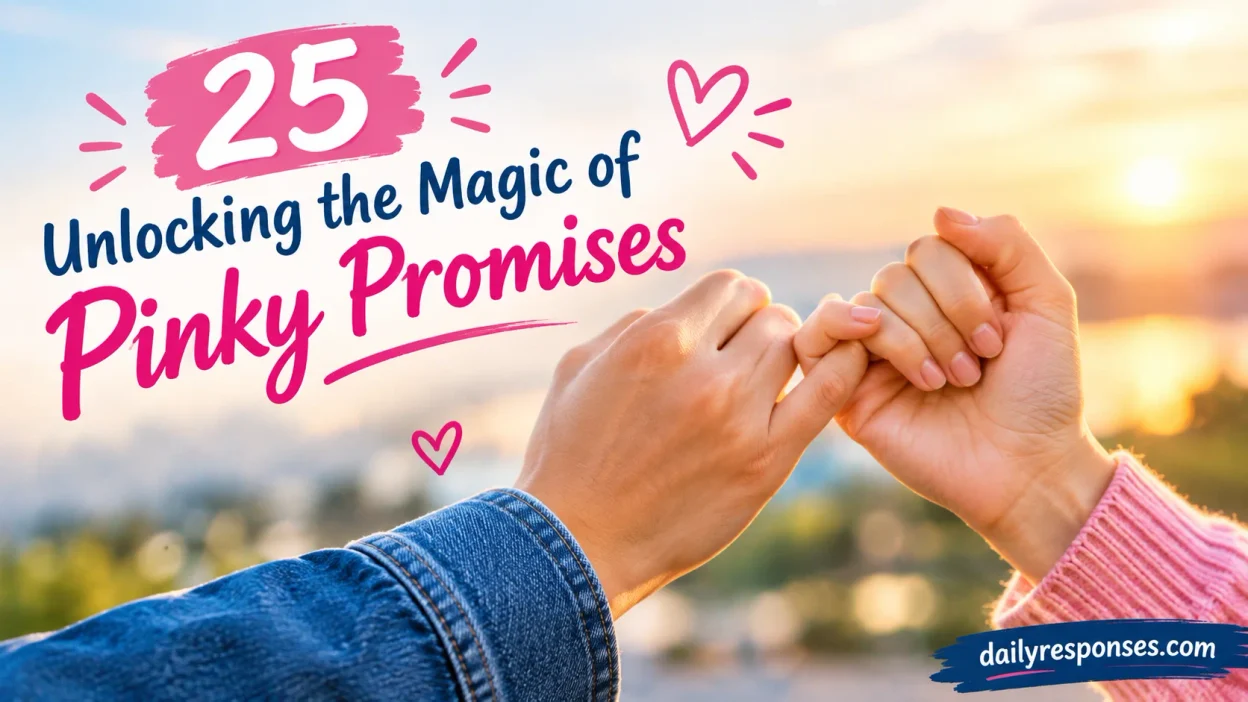
Unlocking the Magic of Pinky Promises shows how a small gesture can build trust, show care, and turn ordinary moments into meaningful memories. Pinky promises have a special way of making ordinary moments feel like meaningful moments. A simple promise can build trust, show care, and remind people that feelings matter. They remain popular in friendships, relationships, families, and childhood memories. A serious commitment, playful secret, or reassuring promise for someone you care about can become more memorable when you choose the right words. The size of the promise may be small, but the trust, connection, commitment, care, and feelings behind it can make it important. In my experience, a simple friendship moment can become a lasting relationship memory when the words feel honest.
The innocence of childhood gives this sacred ritual a warm and personal meaning. Making promises and having them sealed through delicate, intertwining pinky fingers turns a simple gesture into a bond that transcends words. Responding to a pinky promise can feel like an art, because the pinky, fingers, and childhood innocence give even a tiny promise real emotional weight. It may seem almost like a full legal contract, although it is only a little finger link. This makes an ordinary promise feel cute, personal, and surprisingly serious. Whether the promise comes from a best friend, crush, partner, or sibling, the gesture can offer reassurance and strengthen a personal connection.
A pinky promise also carries meaning through follow through. The legal contract comparison may sound playful, but keeping a promise demonstrates accountability and gives your words greater value. A finger link may last briefly, while the trust created by honoring it can remain much longer. From childhood memories to adult relationships, the secret, reassurance, and connection behind it explain why this sacred ritual continues to feel special. The real meaning comes from genuine action, because a promise becomes stronger when people actually follow-through on what they have said.
Quick Answer:
A pinky promise is a simple and playful way to show that you genuinely intend to keep your word. You can make it sweeter, funnier, more romantic, or more meaningful with phrases such as “Pinky swear,” “Cross my heart,” “You have my word,” or “Promise on our friendship.”
Synonyms for : Unlocking the Magic of Pinky Promises
- Pinky Swear
- Cross My Heart
- You Have My Word
- Promise Me
- Deal?
- Promise on Our Friendship
- I Swear
- Count on Me
- I Give You My Word
- It’s a Promise
- Scout’s Honor
- I Promise
- My Word Is My Bond
- Trust Me
- I’ll Keep My Promise
- No Takebacks
- Sealed With a Promise
- I’ve Got You
- Consider It Done
- I’ll Never Break It
- Between You and Me
- Heartfelt Promise
- Handshake Promise
- Promise From the Heart
- Forever Promise
1. Pinky Swear
Scenario: You want to make a simple promise to a close friend and add a playful touch to the moment.
Examples:
- “Pinky swear, I’ll keep your secret safe and never tell anyone about it.”
- “Pinky swear, I’ll be there whenever you need someone by your side.”
- “Pinky swear, I won’t forget what we promised each other today.”
Explanation: “Pinky swear” is one of the most familiar alternatives to a pinky promise. It sounds playful, sincere, and personal, making it perfect for friends, siblings, partners, or anyone you deeply trust.
2. Cross My Heart
Scenario: You want your promise to sound more sincere while reassuring someone who needs your trust.
Examples:
- “Cross my heart, I’ll always tell you the truth about everything.”
- “Cross my heart, I won’t break the promise we made today.”
- “Cross my heart, your secret is completely safe with me.”
Explanation: “Cross my heart” adds emotional seriousness to a promise without making the conversation feel overly formal. It works especially well when someone needs reassurance and wants to know you genuinely mean your words.
3. You Have My Word
Scenario: You’re making a meaningful commitment and want to sound confident, dependable, and sincere.
Examples:
- “You have my word that I’ll handle everything exactly as promised.”
- “You have my word, and I won’t let you down.”
- “You have my word that this stays between the two of us.”
Explanation: “You have my word” feels mature and trustworthy while still expressing personal commitment. It’s useful when you want to move beyond playful promises and communicate that someone can genuinely depend on you.
4. Promise Me
Scenario: You want the other person to make a commitment and share the same level of trust.
Examples:
- “Promise me you’ll take care of yourself while I’m away.”
- “Promise me you’ll always come to me when something feels wrong.”
- “Promise me we’ll never let a small argument ruin everything.”
Explanation: “Promise me” turns a promise into a shared emotional moment. It’s especially meaningful between close friends, family members, or romantic partners who want reassurance that their connection will remain strong.
5. Deal?
Scenario: You want to make a casual agreement without making the moment sound overly serious.
Examples:
- “I’ll keep your secret, and you’ll keep mine. Deal?”
- “We’ll finish this together and celebrate afterward. Deal?”
- “You help me today, and I’ll return the favor tomorrow. Deal?”
Explanation: “Deal?” makes a promise feel relaxed, conversational, and friendly. It works well when both people understand their commitment and want to confirm an agreement without using traditional promise language.
6. Promise on Our Friendship
Scenario: You’re making a meaningful commitment to someone whose friendship is extremely important to you.
Examples:
- “I promise on our friendship that I’ll always stand beside you.”
- “Promise on our friendship, I’ll never intentionally betray your trust.”
- “I promise on our friendship that I’ll support you through this.”
Explanation: This phrase connects the promise directly to the value of your relationship. It can make an ordinary commitment feel deeper because you’re emphasizing how much the friendship means to both of you.
7. I Swear
Scenario: You want to strongly reassure someone that you’re being completely honest about what happened.
Examples:
- “I swear, I had absolutely nothing to do with what happened.”
- “I swear, I’ll finish everything before the deadline arrives.”
- “I swear, I’m telling you exactly what really happened.”
Explanation: “I swear” gives a promise extra emphasis and emotional weight. Depending on your tone, it can sound serious, playful, or reassuring, making it useful in many everyday conversations with people you trust.
8. Count on Me
Scenario: Someone needs reassurance that you’ll be dependable when they need your support.
Examples:
- “Count on me, because I’ll be there when you need help.”
- “You can count on me to keep everything completely confidential.”
- “Count on me, and I’ll make sure we get through this.”
Explanation: “Count on me” focuses on reliability rather than simply making a promise. It tells someone that your support is dependable and that they don’t have to face a difficult situation alone.
9. I Give You My Word
Scenario: You want to make a serious personal commitment and show that your statement should be trusted.
Examples:
- “I give you my word that I’ll never share your secret.”
- “I give you my word, everything will be ready tomorrow.”
- “I give you my word that I’ll keep trying.”
Explanation: “I give you my word” sounds sincere, confident, and intentional. It’s a strong choice when you want your promise to feel important without sounding dramatic or excessively formal in everyday conversation.
10. It’s a Promise
Scenario: You’ve reassured someone and want to make it clear that you genuinely intend to follow through.
Examples:
- “I’ll call you when I arrive safely. It’s a promise.”
- “I’ll keep supporting you through everything. It’s a promise.”
- “I won’t forget this moment or what we agreed. It’s a promise.”
Explanation: “It’s a promise” provides a clear ending to an important reassurance. The phrase feels warm and direct, especially when someone needs certainty that your comforting words are backed by genuine intention.
11. Scout’s Honor
Scenario: You want to make a playful but sincere promise using a familiar expression.
Examples:
- “Scout’s honor, I won’t reveal what you told me.”
- “Scout’s honor, I’ll be ready before everyone else arrives.”
- “Scout’s honor, I’ll remember everything you asked me to do.”
Explanation: “Scout’s honor” has a playful, old-fashioned feel that can make promises more memorable. It’s often used casually among friends when you want to emphasize honesty without making the conversation overly serious.
12. I Promise
Scenario: You want the simplest possible way to reassure someone and make your commitment unmistakably clear.
Examples:
- “I promise I’ll listen whenever you need someone to talk.”
- “I promise I’ll never intentionally make you feel alone.”
- “I promise we’ll find a way through this together.”
Explanation: “I promise” is direct, natural, and emotionally clear. Because it doesn’t rely on complicated wording, it works across friendships, families, relationships, and everyday situations where genuine reassurance matters.
13. My Word Is My Bond
Scenario: You want your promise to sound especially strong and emphasize personal integrity.
Examples:
- “My word is my bond, so you can trust what I’m saying.”
- “My word is my bond, and I’ll honor our agreement.”
- “My word is my bond, so I won’t walk away.”
Explanation: “My word is my bond” emphasizes integrity and reliability. It suggests that once you give your word, you consider yourself personally responsible for honoring what you promised.
14. Trust Me
Scenario: Someone feels uncertain, and you want to reassure them that your intentions are honest.
Examples:
- “Trust me, I’ll take care of everything while you’re gone.”
- “Trust me, I wouldn’t make this promise without meaning it.”
- “Trust me, your secret will never leave this conversation.”
Explanation: “Trust me” is short but emotionally powerful when supported by honest actions. It works best when the relationship already has a foundation of trust and your behavior consistently matches your words.
15. I’ll Keep My Promise
Scenario: You’ve already made a commitment and want to reassure someone that you won’t forget it.
Examples:
- “I’ll keep my promise, even when things become difficult.”
- “I’ll keep my promise because your trust matters deeply.”
- “I’ll keep my promise and do exactly what I said.”
Explanation: “I’ll keep my promise” focuses on follow-through rather than simply making a commitment. It reassures someone that you remember your words and intend to turn that commitment into meaningful action.
Read More : 25 Ways to Respond to a “TBH” on Snapchat
16. No Takebacks
Scenario: You’re making a playful promise and want to emphasize that neither person can change their mind later.
Examples:
- “We agreed to keep this secret, and there are absolutely no takebacks.”
- “You promised to join me tomorrow, so no takebacks allowed.”
- “I promised to help you, and there are definitely no takebacks.”
Explanation: “No takebacks” gives a promise a humorous and playful quality. It’s especially natural among close friends, couples, or siblings who enjoy turning ordinary agreements into memorable little moments.
17. Sealed With a Promise
Scenario: You want to make a promise feel symbolic, special, and emotionally memorable.
Examples:
- “Let’s seal this moment with a promise we’ll both remember.”
- “Our friendship is sealed with a promise to stay honest.”
- “Let’s seal the deal with a promise between us.”
Explanation: “Sealed with a promise” creates a sense of symbolism and emotional importance. It can make a simple agreement feel more memorable, particularly when you’re celebrating friendship, loyalty, or a meaningful shared moment.
18. I’ve Got You
Scenario: Someone is worried or overwhelmed, and you want to reassure them that they have your support.
Examples:
- “Whatever happens next, I’ve got you and won’t leave you alone.”
- “Don’t worry about this; I’ve got you through everything.”
- “You can relax because I’ve got you covered today.”
Explanation: “I’ve got you” communicates support without sounding like a formal promise. It feels natural, warm, and reassuring, especially when someone needs to know that you’re willing to help.
19. Consider It Done
Scenario: Someone asks you to handle something, and you want to confidently assure them that you’ll take care of it.
Examples:
- “You need this finished today? Consider it done, no worries.”
- “Leave the arrangements to me. Consider it completely done.”
- “I’ll handle the details for you. Consider it done.”
Explanation: “Consider it done” communicates confidence and willingness to follow through. It’s particularly useful when someone wants practical help and needs reassurance that you’ll take responsibility for completing the task.
20. I’ll Never Break It
Scenario: You’re making a heartfelt promise to protect someone’s trust or honor an important agreement.
Examples:
- “I’ll never break the promise we made to each other.”
- “I’ll never break it, because your trust means everything.”
- “I’ll never break our agreement, no matter what happens.”
Explanation: “I’ll never break it” makes the commitment sound deeply personal and protective. It’s best suited to meaningful promises where loyalty, trust, and emotional connection matter more than casual agreement.
21. Between You and Me
Scenario: You want to reassure someone that something personal or confidential will remain private.
Examples:
- “Between you and me, I promise this information stays private.”
- “It’s between you and me, and I won’t tell anyone.”
- “Between you and me, your secret is completely safe here.”
Explanation: “Between you and me” establishes a private and trusting atmosphere. When paired with a clear promise, it reassures someone that their personal information or feelings will be treated with respect.
22. Heartfelt Promise
Scenario: You want to express a deeply sincere commitment during an emotional or meaningful conversation.
Examples:
- “This is a heartfelt promise: I’ll always value our friendship.”
- “I’m giving you a heartfelt promise that I’ll stay honest.”
- “My heartfelt promise is to support you whenever you need me.”
Explanation: “Heartfelt promise” emphasizes genuine emotion and sincerity. It works particularly well when the commitment involves important relationships, gratitude, loyalty, or moments when ordinary words don’t fully express your feelings.
23. Handshake Promise
Scenario: You want to replace a pinky promise with another simple physical symbol of commitment.
Examples:
- “Let’s make a handshake promise that we’ll finish this together.”
- “Handshake promise, I’ll show up when you need support.”
- “Seal it with a handshake promise and no changing plans.”
Explanation: A handshake promise adds a friendly physical gesture to your commitment. It can feel slightly more mature than a pinky promise while still keeping the moment personal, playful, and memorable.
24. Promise From the Heart
Scenario: You want to show that your commitment comes from genuine feelings rather than casual words.
Examples:
- “This is a promise from the heart: I’ll always support you.”
- “I’m making this promise from the heart because you matter.”
- “Promise from the heart, I’ll never intentionally hurt your trust.”
Explanation: “Promise from the heart” highlights emotional sincerity and genuine care. It’s especially fitting for romantic partners, close friends, or family members when you want your commitment to feel personal and deeply meaningful.
25. Forever Promise
Scenario: You want to express a lasting commitment during a special moment with someone important.
Examples:
- “Let’s make a forever promise to always remember this special day.”
- “This is our forever promise to keep choosing friendship.”
- “I’m making a forever promise to cherish what we share.”
Explanation: “Forever promise” gives a commitment a lasting, sentimental feeling. It’s best used for special relationships and meaningful moments where you want to emphasize continuity, loyalty, and the lasting value of your connection.
FAQs:
1. What does a pinky promise mean?
A pinky promise is a simple way of showing that you are serious about keeping your word. It often represents trust, care, commitment, and a personal connection between people.
2. Why are pinky promises popular?
Pinky promises are popular because they make an ordinary promise feel more personal and memorable. They are commonly associated with childhood, friendships, relationships, families, and meaningful moments.
3. Are pinky promises only for children?
No. Although pinky promises are strongly connected with childhood, adults can use them with friends, partners, siblings, or anyone they share a close connection with.
4. How do you make a pinky promise?
Two people usually hook or intertwine their little fingers while making a promise. The small gesture adds a playful but meaningful sense of commitment to their words.
5. Why does a small pinky promise feel so serious?
A pinky promise can feel serious because the gesture connects spoken words with trust and accountability. Even though it is tiny, it can carry emotional meaning when the promise genuinely matters.
Conclusion:
Pinky promises show that meaningful connections don’t always need grand gestures. A simple link of two fingers can express trust, care, reassurance, and commitment in a memorable way.
Whether shared between childhood friends, partners, siblings, or family members, the magic comes from honoring the words behind the gesture. Choosing sincere words and following through can turn a tiny promise into a lasting memory.

Alyan Bhatti is the author of DailyResponses.com, where he shares creative responses, smart conversation tips, and practical communication advice to help readers express themselves with confidence every day.
[…] Read More : 25 Unlocking the Magic of Pinky Promises […]